
The notification popped up on my phone last week.
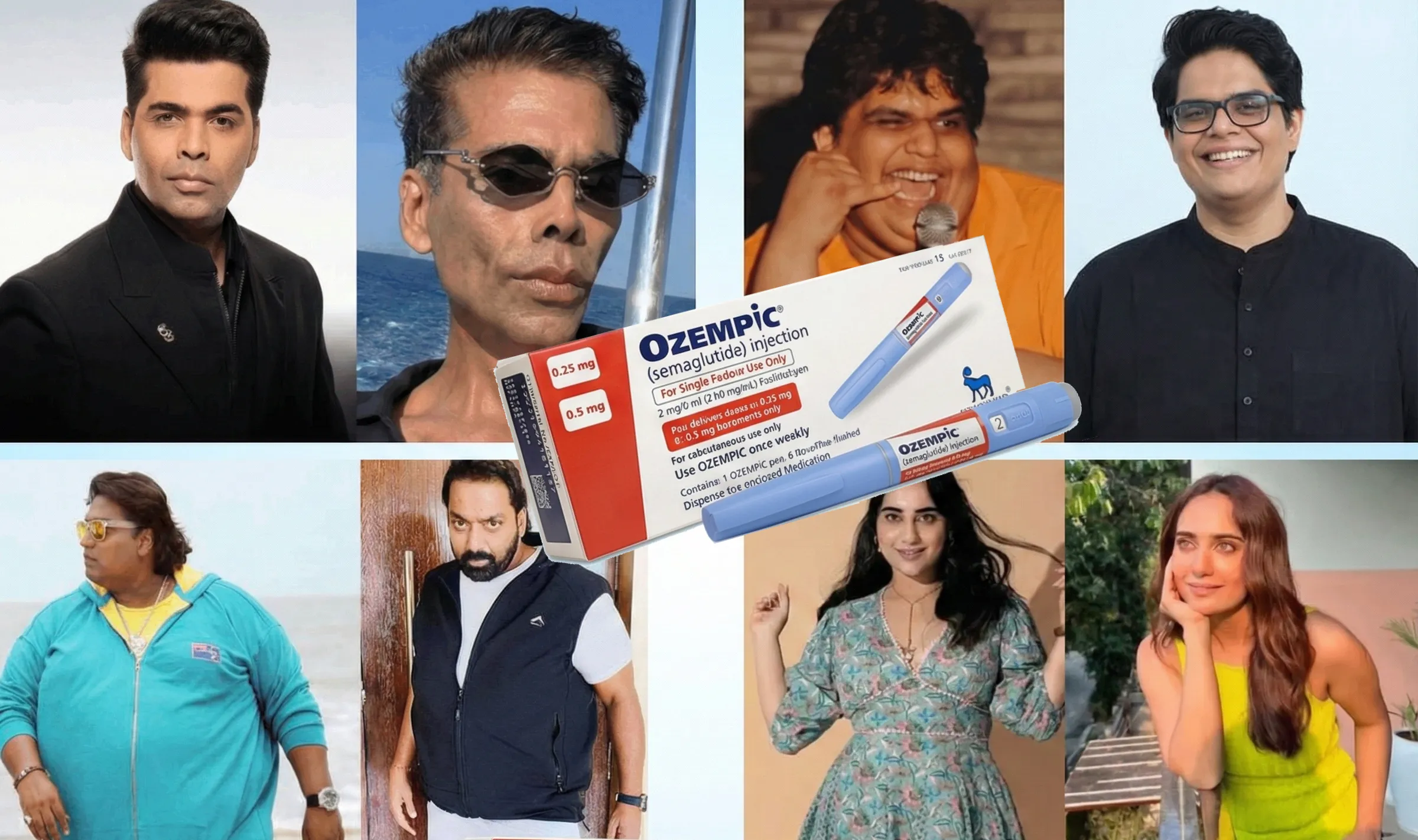
“Ozempic now available in India.”
Within hours, my DMs exploded. Clients asking if they should try it. Friends wondering if it’s “the answer” they’ve been waiting for. Even my mother forwarded me a WhatsApp message (with 47 emojis) asking if this is “that Hollywood weight loss injection.”
Here’s what nobody’s telling you in those glossy headlines:
Ozempic is more like a band-aid rather than magical cure.
And before you think I’m being dramatic I’ve spent the last five years coaching over 100 busy professionals through sustainable fat loss. I’ve seen every shortcut, every “hack,” every promise of effortless transformation.
This one? It’s different. More expensive. More hyped. And potentially more dangerous if you don’t understand what you’re actually getting into.
So let’s cut through the noise. Let’s talk about what Ozempic actually is, who it’s really for, and why most Indians looking at it are asking the wrong question entirely.
What Actually Is Ozempic? (Beyond the Instagram Hype)
First, the basics.
Ozempic (semaglutide) is a GLP-1 receptor agonist a once-weekly injection originally designed for Type 2 Diabetes management.
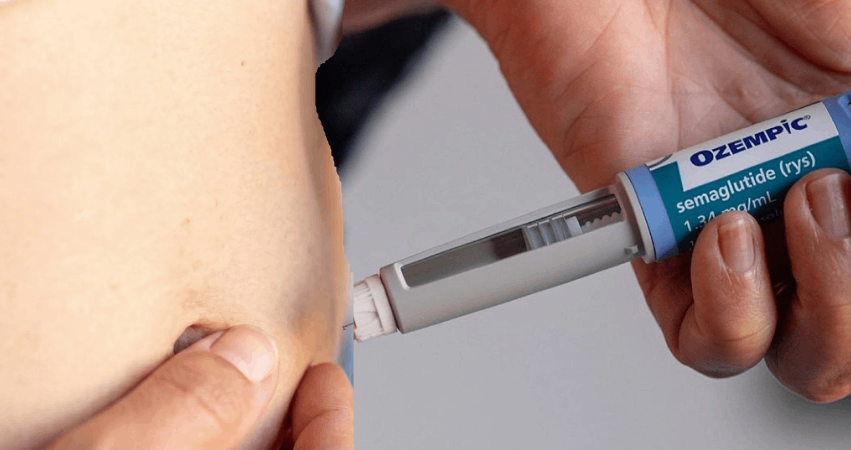
Here’s how it works, in plain English:
- Slows stomach emptying – Food sits in your stomach longer
- Reduces appetite – Your brain gets stronger “I’m full” signals
- Improves insulin response – Helps control blood sugar
The end result? You eat less. That’s literally it.
It doesn’t “burn fat.” It doesn’t “boost metabolism.” It doesn’t magically transform your body composition.
It makes you less hungry. So you consume fewer calories. So you lose weight.
That’s the entire mechanism.
Now, for someone with Type 2 Diabetes who’s struggling with blood sugar control despite lifestyle changes? This can be genuinely life-changing. It helps lower HbA1c levels, reduces cardiovascular risks, and offers kidney protection all backed by solid clinical research.
But here’s where things get messy:
In India, Ozempic is approved ONLY for Type 2 Diabetes. Not for casual weight loss. Not for looking good at your cousin’s wedding. Not for fitting into that outfit you bought in 2019.
Yet celebrities, influencers, and now regular people are treating it like a cosmetic procedure. A shortcut. A “finally, I can skip the hard work” solution.
And that’s where the danger begins.
The Celebrity Effect: When Hollywood Problems Become Indian “Solutions”
Let’s be honest about how we got here.
Elon Musk tweets about it. Kim Kardashian allegedly uses it. Every other Hollywood transformation story whispers about “a little help” from GLP-1 agonists.
Amazing that Ozempic is actually affecting @Walmart food sales!
— Elon Musk (@elonmusk) October 6, 2023
While no drug is without side effects, health problems associated with obesity almost certainly exceed the risks of GLP-1 agonists.
And suddenly, everyone in Mumbai, Bangalore, Delhi is asking their doctors: “Can I get that too?”
Here’s the uncomfortable truth:
The West’s relationship with Ozempic is built on a completely different food culture, lifestyle, and medical infrastructure than ours.
Americans are dealing with ultra-processed food addiction, fast-food-dominant diets, and a healthcare system that often defaults to pharmaceutical intervention over lifestyle change.
India? We have different problems. And different advantages.
Why India Doesn’t Need to Copy the West’s Ozempic Obsession
We already have access to one of the world’s healthiest traditional diets.
Think about it:
- Dals packed with protein and fiber
- Sabzis loaded with micronutrients
- Rotis, rice, and whole grains when portioned correctly
- Curd, paneer, and dairy for gut health
- Spices like turmeric, ginger, and garlic with anti-inflammatory properties
Our grandparents ate this food and stayed lean, active, and metabolically healthy well into their 70s.
What changed?
We adopted Western convenience without Western activity levels.
We started eating like Americans (processed foods, packaged snacks, sugary drinks) while living increasingly sedentary lives (desk jobs, car commutes, screens 24/7).
The solution isn’t an injection from the West. The solution is getting back to what worked before we broke it.
But that requires effort. Discipline. Patience.
And a ₹2,200/week injection? That sounds way easier.
Until you understand what you’re actually signing up for.
(If you’re struggling to balance Indian food culture with fat loss, our Rule of Thirds nutrition framework breaks down how to eat traditional Indian meals while still hitting your goals.)
The Ozempic Reality Check: What They’re NOT Telling You
Here’s where the marketing ends and the science begins.
1. The Weight Loss is Temporary (And Comes at a Cost)
Yes, people lose weight on Ozempic. Sometimes dramatic amounts.
But here’s what the studies show:
60-80% of the weight comes back after stopping the drug.
Think about that. You spend ₹8,800-11,175 per month. For months. Maybe years. You lose 15 kg.
Then you stop.
And within a year, 12 kg comes back.
“But at least I lost weight!” you might argue.
Except here’s the brutal part:
The weight you lose includes muscle. The weight you regain is all fat.
Let me break this down because it’s critical:
When you’re on Ozempic, you’re eating way less. If you’re not deliberately eating enough protein and doing resistance training, your body doesn’t just burn fat—it cannibalizes muscle for energy.
So you might lose 15 kg: 10 kg fat, 5 kg muscle.
When you regain 12 kg? It’s 12 kg of pure fat.
You’ve effectively traded muscle mass for fat mass.
Your weight on the scale might look similar to where you started. But your body composition? Worse. Your metabolism? Slower. Your strength? Gone.
And now you need even more intervention to fix what the “solution” broke.
2. Side Effects Are Real (And Often Downplayed)
The promotional materials mention “some mild gastrointestinal discomfort.”
Let me translate:
- Nausea (sometimes constant, for weeks)
- Vomiting (not just once , regularly)
- Severe bloating
- Constipation or diarrhea (often alternating)
- Acid reflux
- Complete loss of appetite (sounds good until you realize you’re not eating enough protein to preserve muscle)
Some people tolerate it fine. Others spend months feeling like they have a permanent stomach flu.
And here’s the kicker: if side effects get too bad and you stop the drug abruptly? Rebound weight gain hits even faster.
3. It Doesn’t Fix Your Relationship with Food
This is the part nobody wants to hear, but it’s the most important.
Ozempic doesn’t teach you how to eat.
It doesn’t address why you overeat. It doesn’t fix stress eating. It doesn’t solve your ultra-processed food addiction. It doesn’t teach you portion control. It doesn’t help you navigate social situations, travel, or celebrations.
It just chemically suppresses your appetite.
The moment that suppression stops? All your old habits come roaring back.
Because you never actually learned the skills you needed to maintain a healthy weight.
You just outsourced the problem to a weekly injection.
(This is exactly why we focus on habit formation and mindset in our online fitness coaching programs – because sustainable transformation requires changing how you think about food, not just what you eat.)
India’s Real Problem: We’re Treating Symptoms, Not Causes
Let’s zoom out for a second.
India now has 101 million people with Type 2 Diabetes. We’re second only to China globally.
On top of that:
- 136 million people with prediabetes
- 254 million living with obesity
These aren’t genetic issues. They’re lifestyle diseases.
The Root Causes Nobody Wants to Address
1. We’ve Abandoned Our Traditional Diets
Our grandparents ate dal-chawal, sabzi-roti, and stayed lean.
We eat packaged foods, processed snacks, sugary chai, and wonder why we’re sick.
2. We’ve Become Dangerously Sedentary
Office jobs. Long commutes. Screen addiction.
The average Indian professional walks less than 3,000 steps a day. Our bodies are designed for 10,000+.
3. We’ve Normalized Metabolic Dysfunction
“Thoda sugar hai” is treated like a minor inconvenience, not a warning sign.
We wait until it’s full-blown diabetes before we take it seriously.
4. We’re Culturally Resistant to Preventive Health
We’ll spend ₹2,200/week on an injection. But suggesting meal prep, daily walks, and sleep hygiene? “Too much effort.”
We want the pill. The injection. The quick fix.
And pharmaceutical companies are thrilled to sell it to us.
The Better Path: What Actually Works (Without Weekly Injections)
Here’s the inconvenient truth:
For the vast majority of people considering Ozempic for weight loss, there’s a simpler, cheaper, and more sustainable solution.
Strategy 1: Fix Your Eating Pattern First
Before you inject anything, try intermittent fasting.
I’m not talking about extreme 48-hour fasts. I’m talking about:
- 16:8 fasting (eat within an 8-hour window, fast for 16 hours)
- Skip breakfast or dinner (whichever feels more natural)
- Stop snacking between meals
This naturally creates a caloric deficit, improves insulin sensitivity, and teaches your body to use stored fat for energy.
Cost? ₹0.
Side effects? Maybe some initial hunger that passes in 3-5 days.
Results? Sustainable fat loss without muscle loss (especially if paired with adequate protein).
Strategy 2: Lower Your Carb Load (But Don’t Eliminate Carbs)
You don’t need to go full keto. You don’t need to quit rice forever.
You just need to balance your macros properly:
- Increase protein (dal, paneer, eggs, chicken, fish) – this preserves muscle during fat loss
- Reduce refined carbs (maida, white bread, packaged snacks)
- Keep healthy carbs (brown rice, rotis, oats) in moderate portions
- Add more vegetables (fiber keeps you full and improves gut health)
A typical Indian thali, when proportioned correctly, is one of the best fat-loss meals on the planet.
We don’t need foreign drugs. We need to stop bastardizing our own food culture.
(Our fitness coaching for busy professionals specifically focuses on making Indian meals work for fat loss without giving up food you love.)
Strategy 3: Move Your Body (More Than You Think)
You don’t need a gym membership. You don’t need expensive equipment.
You need to walk 10,000 steps daily and do some form of resistance training 3x per week.
That’s it.
Walking improves insulin sensitivity, burns calories, and costs nothing.
Resistance training preserves muscle, which keeps your metabolism healthy.
Together? They do what Ozempic can’t: build a body that stays healthy even when you’re not on drugs.
Who Should Actually Consider Ozempic? (The Honest Answer)
I’m not saying Ozempic has no place. For certain people, it’s genuinely helpful.
You might be a candidate if:
✅ You have Type 2 Diabetes with poor glycemic control
✅ You’ve already made significant lifestyle changes (diet, exercise, sleep) for 6+ months with minimal results
✅ You have obesity with metabolic complications (cardiovascular risk, kidney issues)
✅ You’re working closely with an endocrinologist who understands your full medical history
✅ You’re committed to maintaining lifestyle changes while on the drug and after stopping it
You’re NOT a candidate if:
❌ You just want to lose 5-10 kg for a wedding/event
❌ You haven’t tried basic interventions (fixing diet, moving more, sleeping better)
❌ You’re looking for a shortcut to avoid discipline
❌ You think the injection will “do the work” while you continue unhealthy habits
❌ You’re not willing to do resistance training and eat adequate protein (to prevent muscle loss)
If you fall into the second category, save your money. Invest in a good coach, fix your habits, and build something sustainable.
India’s Diabetes Reversal Movement: The Untold Success Stories
Here’s something the pharmaceutical industry doesn’t want you to know:
Hundreds of Indians are reversing Type 2 Diabetes through diet and lifestyle alone.
Clinical programs across India run by functional medicine doctors, diabetes educators, and holistic health coaches are showing remarkable results:
- Hemoglobin (HbA1c) levels dropping from 9% to under 6%
- Patients coming off insulin completely
- Weight loss sustained for years
- Energy, sleep, and mental clarity restored
No injections. No side effects. No monthly ₹10,000 bills.
Just real food, consistent movement, and medical supervision.
These stories don’t make headlines because there’s no billion-dollar corporation behind them. But they’re real. And they’re replicable.
(If you’re dealing with prediabetes or metabolic issues and want guidance on lifestyle reversal, our coaching programs in Delhi, Mumbai, Bangalore, Pune, and Chennai work with endocrinologists to support evidence-based interventions.)
My Final Take: Ozempic Is a Tool, Not a Solution
Look, I’m not anti-medication. I’m not some purist who thinks everything can be solved with turmeric water and yoga.
If Ozempic helps someone with severe diabetes avoid heart disease or kidney failure? Absolutely worth it.
But for the majority of people getting swept up in the hypeespecially those just looking for easier fat loss this is a dangerous distraction from the real work.
Because here’s what I know after coaching hundreds of people:
The best body you’ll ever have comes from discipline, not shortcuts.
It comes from:
- Learning to eat like an adult
- Moving your body consistently
- Managing stress without using food
- Sleeping 7-8 hours
- Building habits that last decades, not weeks
Can Ozempic help some people along that journey? Sure.
But it can’t replace the journey itself.
And if you’re not willing to walk that path, no injection in the world will save you.
So What Should You Do?
If you’re reading this and considering Ozempic, here’s my advice:
Step 1: Talk to your doctor (not your influencer friends)
Step 2: Get honest about whether you’ve genuinely tried lifestyle interventions
Step 3: Understand that this is not a magic bullet it’s a medical tool with real risks
Step 4: If you proceed, commit to proper protein intake, resistance training, and long-term habit change
And if you’re just looking for sustainable fat loss without the injections, side effects, or ₹40,000/year price tag?
Start simple:
- Walk 10,000 steps daily
- Eat more protein, fewer processed carbs
- Try intermittent fasting
- Sleep 7-8 hours
- Get a coach if you need accountability
Will it take longer? Yes.
Will it be harder? At first, maybe.
Will it actually stick? Absolutely.
Because the best transformations aren’t built on weekly injections.
They’re built on daily choices.
And that’s something no pharmaceutical company can sell you.
Pranav Jandial
Certified Fitness Coach | Style में Fit
Helping busy professionals build sustainable health without shortcuts
P.S. If you’re struggling with weight loss, metabolic issues, or just feeling lost in the noise of conflicting advice, our online coaching programs focus on evidence-based, sustainable strategies that work for Indian lifestyles. No injections required. Just real guidance from someone who’s been through the journey himself.
Leave a Reply